Refining Character
Posted on
In this short Torah shiur (class) on sensitivity to others, Rabbi Hanoch Teller begins with a discussion on refining one’s character.

The Torah Learning on this site is dedicated in memory of Rochel Leah bas R' Chaim Tzvi and R' Yisrael Menachem ben R' Binyamin.

In this short Torah shiur (class) on sensitivity to others, Rabbi Hanoch Teller begins with a discussion on refining one’s character.
In this shiur (Torah class), Rabbi Hershel Reichman discusses the prayers of our Forefathers, Abraham, Issac and Jacob, and how those prayers affected the institution of prayer today.
In this Torah shiur (class) on the laws and mindsets relating to proper speech, Rabbi Ginsburg finishes the first half of Sefer Chofetz Chaim, completing a discussion of klal 5. Rabbi Ginsburg sums up the course with chizuk, encouragement, regarding developing a positive attitude towards other people, and trying to view others in a positive light.
In this chinuch shiur on deepening our children’s religious experience, Rebbetzin Tziporah Heller discusses inculcating the Torah value of being sameach b’chelko, satisfied with one’s lot in life, in children of all ages.
In this short shiur (Torah class), Rabbi Hershel Reichman explains the background of the mitzvah of prayer.
Mrs. Chana Prero teaches the classical commentaries in analyzing Amalek’s attack on the Jewish People.
Rabbi Moshe Nechemia Reichman presents an overview of the opinions of the Tosafos and the Rishonim regarding answering kedusha and Kaddish while one is reciting kriat shma.
On Parshat Beshalach, Mrs. Shira Smiles focuses on the pasuk that says that if the Jewish people do what is just in Hashem’s Eyes, and observe the commandments, then all the diseases that Hashem placed upon Egypt, He will not bring upon the Jewish people.
In this Torah shiur (class) on Sefer Yirmiyahu, Rabbi Avishai David discusses the moving episode of Yirmiyahu’s choice after the Churban. Nevuchadnetzar offers Yirmiyahu the option of staying in the destroyed city of Jerusalem with a small remnant of the Jewish popluation, or going down to Babylon with the majority of the Jewish people. Yirmiyahu chooses to stay in Eretz Yisrael, so that Hashem will accompany His children in galut. Rabbi David ends with a discussion of the nature of ‘Shechinta b’Galuta”, Hashem in Exile.
In this shiur (Torah class), Rabbi Hershel Reichman continues to explain the concept of Galut, exile, from a Chassidic perspective. In this lesson, Rabbi Reichman explores how exile is an integral part of G-d’s Master Plan for the Jewish People and the World’s history.
Rebbetzin Tziporah Heller relates the causes for people’s rebellion against Hashem, the ramifications of such rebellion, and why tzaddikim (righteous people) get punished when they did not sin.
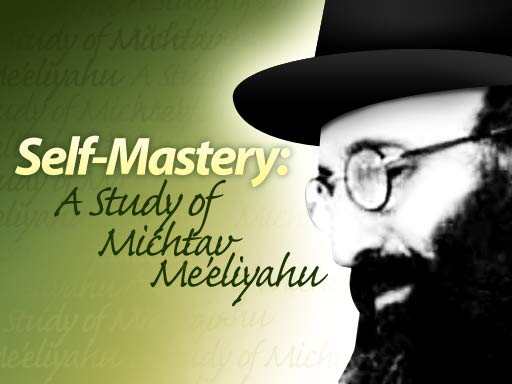
In this shiur (Torah class), Rabbi Yitzchak Cohen begins teaching Michtav Me’Eliyahu, Kuntress HaChessed, in which the midda (character trait) of kindness is discussed. In this segment, Rabbi Cohen expounds on the concept of being a giver and how one should strive to emulate G-d’s giving.
Mrs. Chana Prero analyzes the Jews’ exit from Egypt.
In this chinuch shiur (class) on bringing depth to our children’s appreciation for Torah, Rebbetzin Tziporah Heller addresses the balance between building a trusting relationship with one’s teen-aged children while still asserting the need for kibud av v’aim, and submission to parental authority.
In this shiur (Torah class), Rabbi Ari Jacobson continues with detailing the halachot concerning the beginning of Shemoneh Esrai.
On Parshat Bo, Mrs. Shira Smiles speaks about the connection between the blood or Korban Pesach, and the blood of a Brit Milah, and its tremendous relevance for our lives.
In this Torah shiur (class) on Sefer Yirmiyahu, Rabbi Avishai David teaches perek 39, which describes the conquest of Jerusalem and the exile of Tzidkiyahu and the Jewish people. Ironically, Yirmiyahu is protected by Nevuchadnetzar, while those powerful Jews who thought they would persevere are exiled.
Rebbetzin Tziporah Heller teaches perek 12, which describes the exile of the Shechina, the Divine Presence, from Yerushalayim, and shows how the calamity of exile is also the beginning of the path to redemption.
Rabbi Moshe Nechemia Reichman explains the Gemara’s argumant over whether one can interrupt his Torah study in order to recite Kriat Shma.
Rabbi Moshe Nechemia Reichman reviews the Gemara’s discussion of a case where one falls asleep in the middle of reciting the Shma prayer.
In this shiur (Torah class) Rabbi Hershel Reichman delves into the stages of exile the Jewish People experienced in Egypt.
Mrs. Chana Prero analyzes the use of G-d’s different names at the beginning of parsha.
Rabbi Hanoch Teller talks about the life and accomplishment of Rav Eliyahu Eliezer Dessler, one of the foremost products of the Kelm Yeshiva.
On Parshat Va’eira, Mrs. Shira Smiles examines the first passuk of the parsha, which contains Hashem’s rebuke to Moshe.
In this Torah class (shiur) on Sefer Yirmiyahu, Rabbi Avishai David teaches perek 38. Tzidkiyahu, the righteous king of the remnant of the Jews left in Yerushalyaim, is captive to the evil courtiers surrounding him. He secretly meets with Yirmiyahu and saves Yirmiyahu from death. Ultimately, Tzidkiyahu is captured and taken to Bavel, where his eyes are blinded and his children are killed in front of him. At this painful moment, Tzidkiyahu acknowledges that he deserved this punishment, and that all of the prophesies of doom had been fulfilled.
Rabbi Hanoch Teller continues to explore the nature and accomplishments of the famed yeshiva of Kelm, known as the breeding ground of gedolim, Torah giants.
Rebbetzin Tziporah Heller teaches perakim 10 and 11, which deal with the prophesies of the destruction of the city of Jerusalem and the devastation of the Jewish people.
Mrs. Chana Prero analyzes Moshe’s actions after he leaves the burning bush.
In this shiur (Torah class) on Sefer Yirmiyahu, Rabbi Avishai David teaches chapter 38. In this perek, the tension between Yirmiyahu, the noblemen, and Tzidkiyahu is apparent. The tension leads to the nobles throwing Yirmiyahu into a lime pit for his prophesies, and Tzidkiyahu removing him and meeting with him secretly.